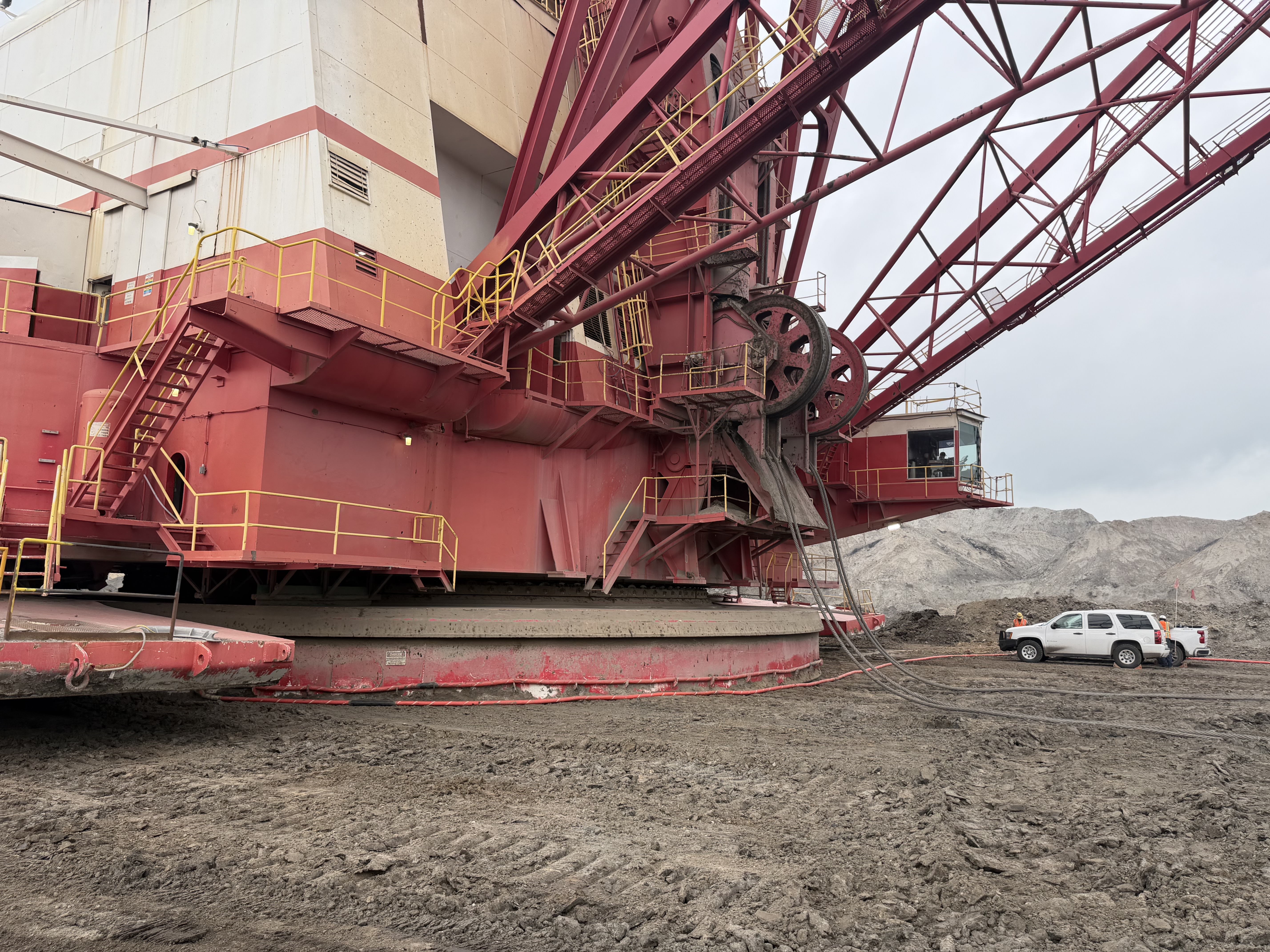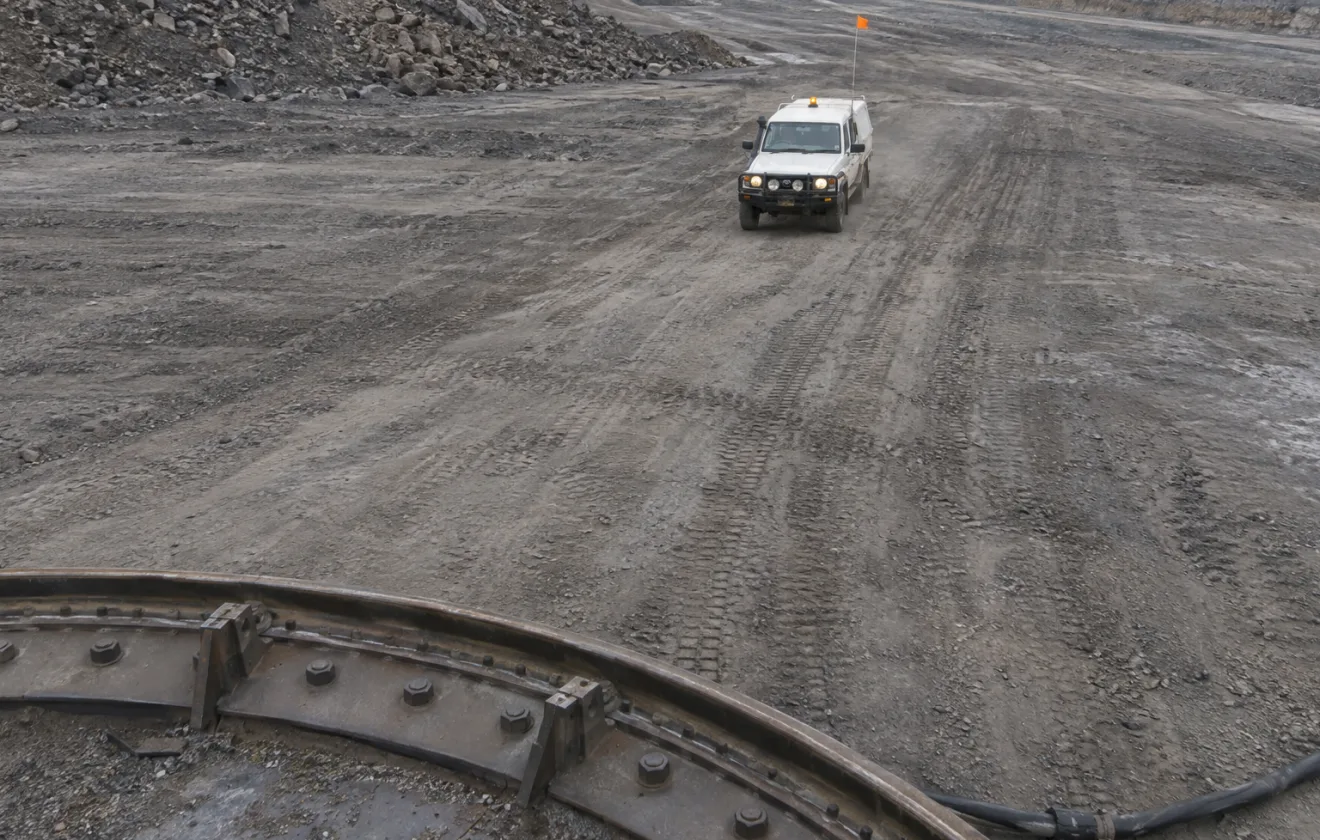
22.20m
Vehicle · slew reduction band
The machine slows itself
Agreed by three LiDAR units named on the alert. The slew comes down in proportion and the machine keeps working.
Slew reduced by 39.01%
Mining Solutions • Proximity Detection (PAS)
A proximity awareness system for heavy mining equipment. It picks a person up at 50 metres and, from fifteen, takes the slew down in proportion as they close, so the stop, when it comes, is a controlled one and not an emergency.
Nothing to wear, nothing to carry, and only the last five metres are a stop.
Person detected on right hand side at 50.0 m
Tracked, no intervention
Plan view. Thresholds and the action each one triggers are set per machine at commissioning.
Trusted across mining,
manufacturing and food production





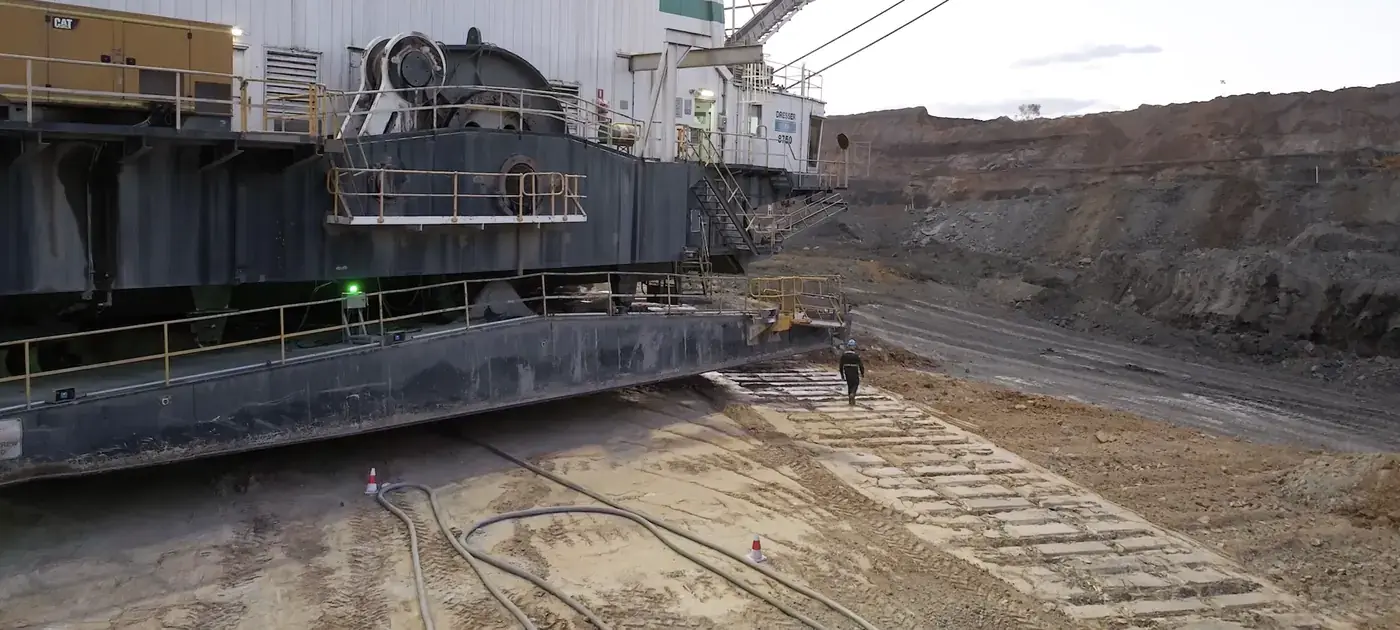
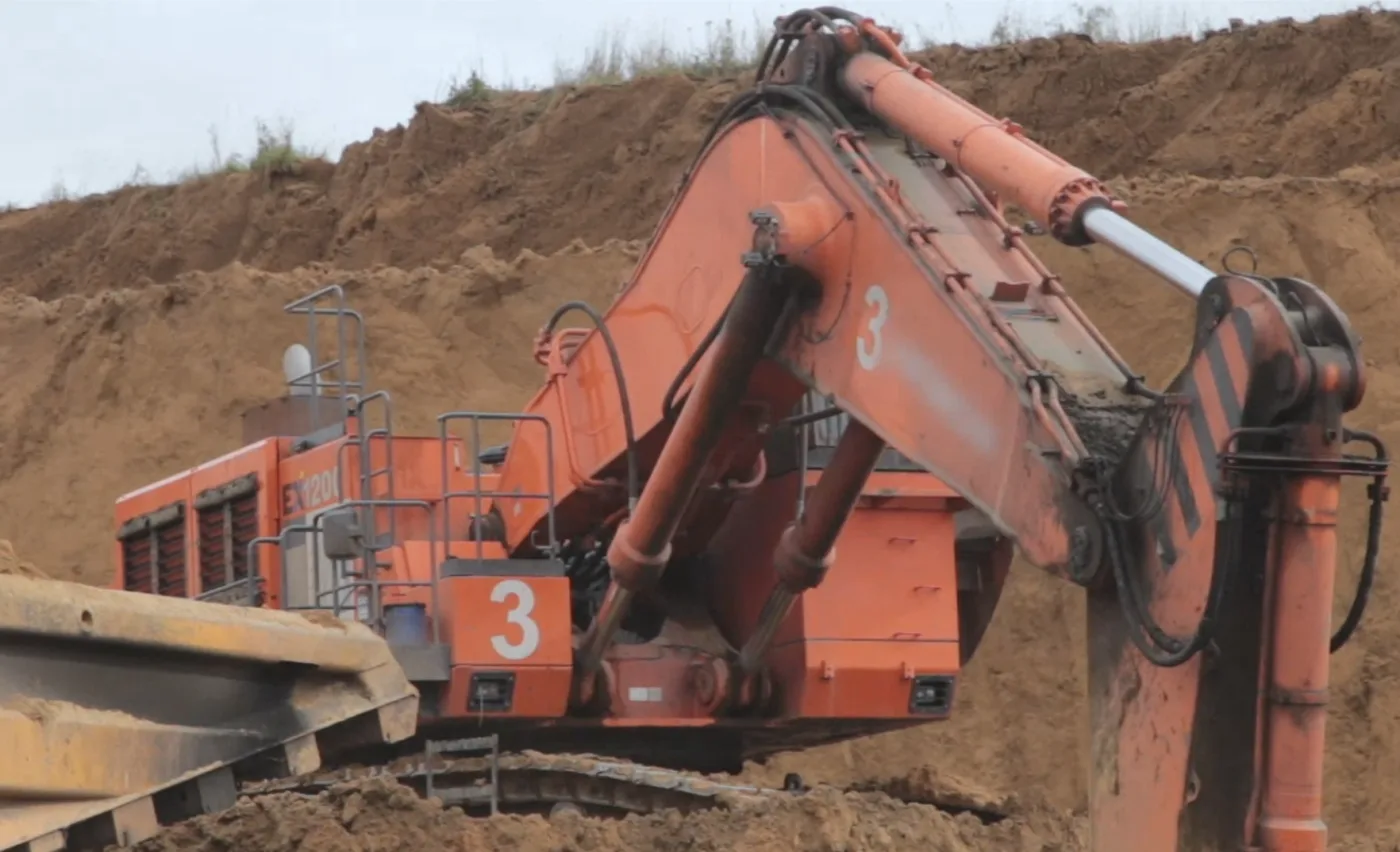
Until 2022, nothing on the market was integrated to the drives on a dragline.
01
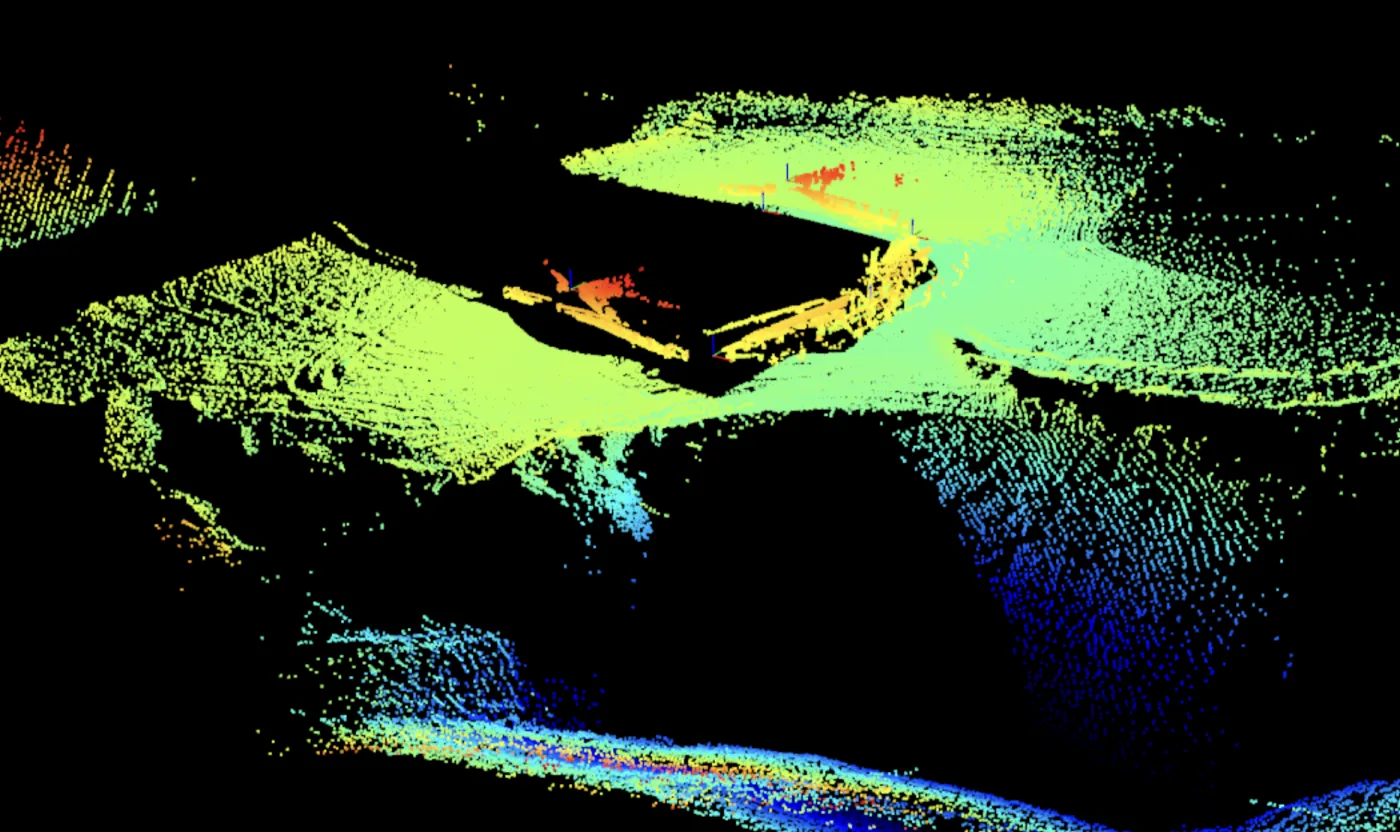
LiDAR holds its range through dust, rain and darkness, and returns the ground as well as whatever stands on it.
02
Optical says what that return is: a person, a light vehicle, a dozer or a trailing cable.
03
Only once more than one unit agrees, and only through the machine’s own drive controls.
03Before anything reaches the drive
03Acts on the drive
Thresholds and the action each one triggers are set per machine. This site runs wider bands than the standard, slew reduction from 25 metres and a controlled stop inside 10, which is why a vehicle at 22 metres is already being slowed.
22.20m
Vehicle · slew reduction band
Agreed by three LiDAR units named on the alert. The slew comes down in proportion and the machine keeps working.
Slew reduced by 39.01%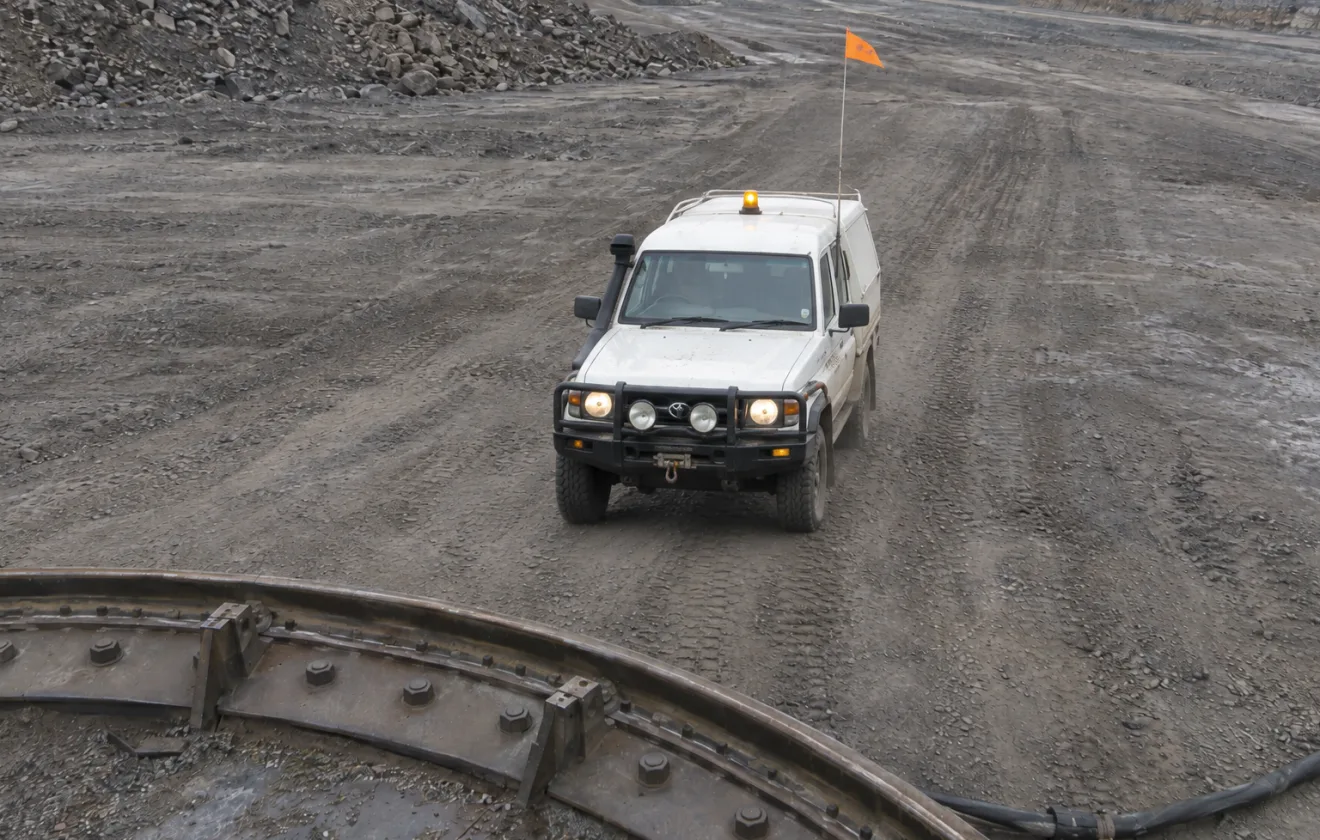
11.43m
Vehicle · deeper in the slew reduction band
Still outside the ten metre stop band, so nothing stops. The reduction is proportional, so the closer the vehicle comes, the more of the slew it takes away.
Slew reduced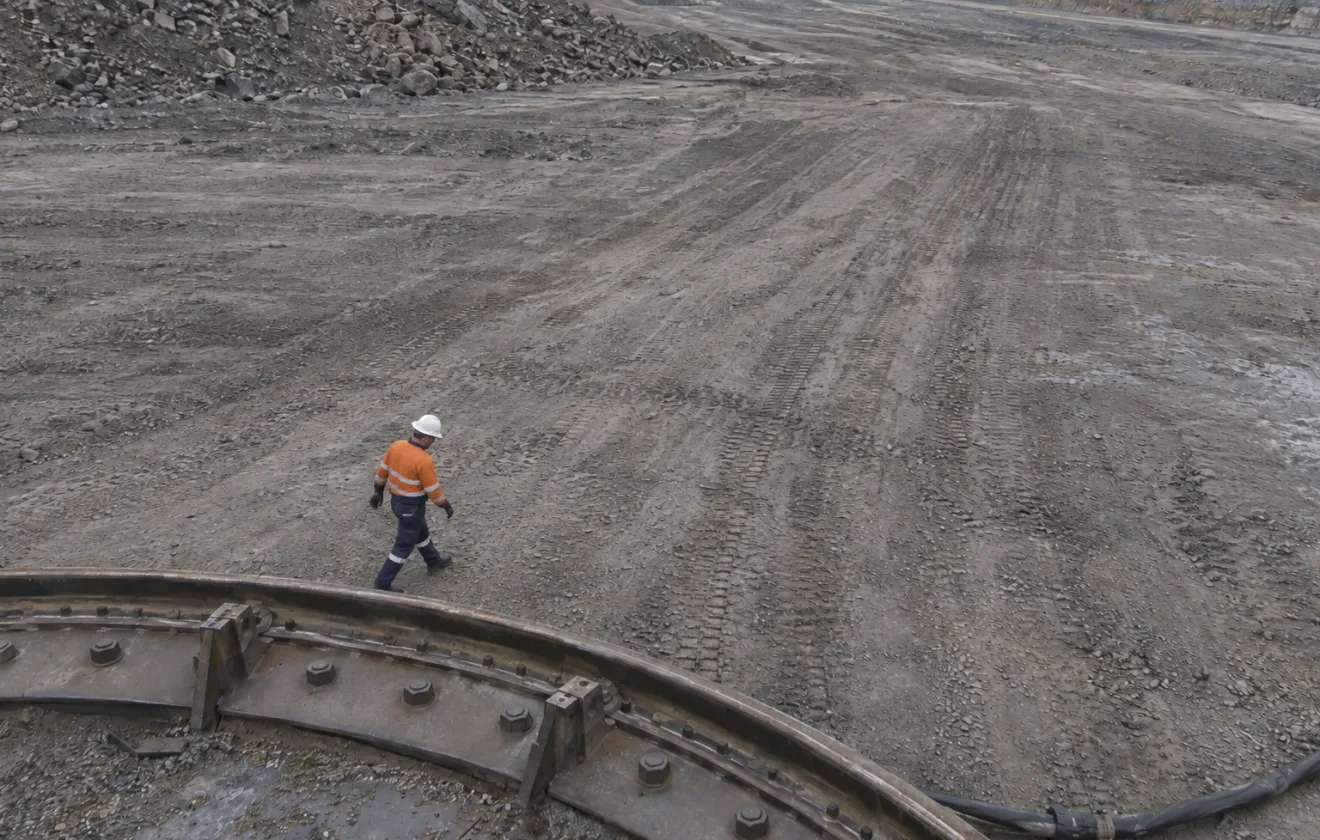
5.49m
Person · inside the stop band
No wearable, no tag, no beacon. Seen, classified, and the machine brought down through its own drive controls.
Controlled stopNo separate console and no interpretation layer. The detections that reach the drive are the ones on the screen, beside the health of every unit feeding them.
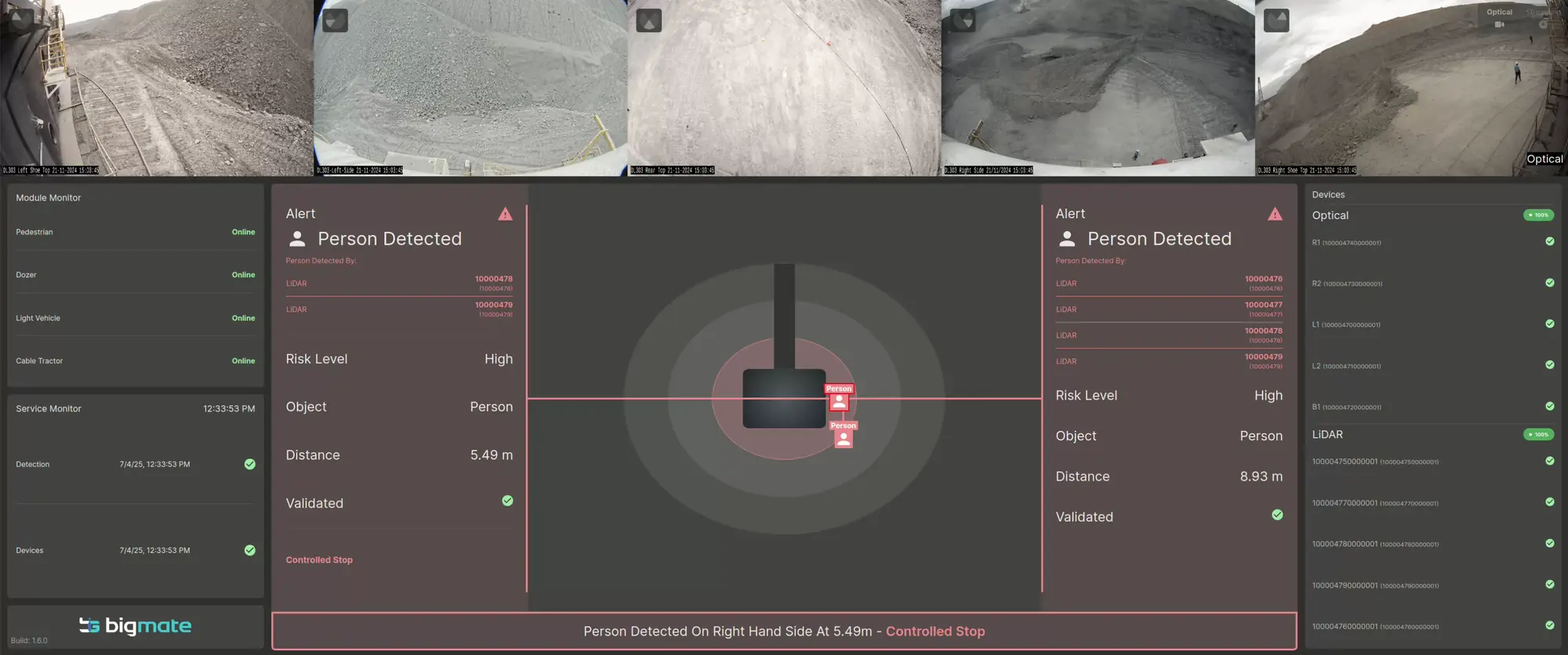
Fixed cameras around the machine, so the operator can look at the ground the system is talking about.
Object, distance, assessed risk, validation and the action taken, with every contributing unit named by serial.
The zones drawn where they actually fall, with each tracked object placed on them.
Every optical and LiDAR unit currently online, so a unit that drops out is visible rather than silently absent.
Book a demo with our engineers and see real-time perception running on your operations.
Proven in production
99.99986%
Detection accuracy in live operation
Across 2,689,870 minutes of analytics, and counting.